Search in Members
Search in Members
Search in Albums
Search in Photos
Search in Blog
Search in Businesses
Search in Contests
Search in Events
Search in Groups
Search in Music Albums
Search in Music Songs
Search in Pages
Search in Questions
Search in Quotes
Search in Site Team
Search in Recepies
Search in Thoughts
Search in Videos
Search in Channels
Search in Wishes
Search in Prayers
11 minutes, 19 seconds
-30 Views 0 Comments 0 Likes 0 Reviews
Picture a thin line of snow high in the sky. The ground drops far down on both sides. It is dark and very cold, and the stars still shine. Then the sun comes up and lights the tallest mountains in the world. This is summit day on Lobuche Peak in Nepal. Many people ask if it is too hard. Here is the simple answer.
Lobuche East is 6,119 meters high. It stands in the Khumbu area, close to Mount Everest. People call it a trekking peak. That name sounds easy, but it is not. It only means the climb is easier than the very biggest mountains. Many climbers pick it as their first real Himalayan climb. From the top, Everest, Lhotse, Nuptse and Ama Dablam stand together in one long line.
The biggest problem is the height. High up, the air is thin, so it is hard to breathe. Walking feels slow, and sleeping is not easy. The body needs time to get used to it. That is why most climbers walk the Everest Base Camp trail first. Rest days are not wasted days. They help the body get strong.
The cold is hard too. At night, the camp gets much colder than a freezer. Warm clothes, good boots and a thick sleeping bag are a must.
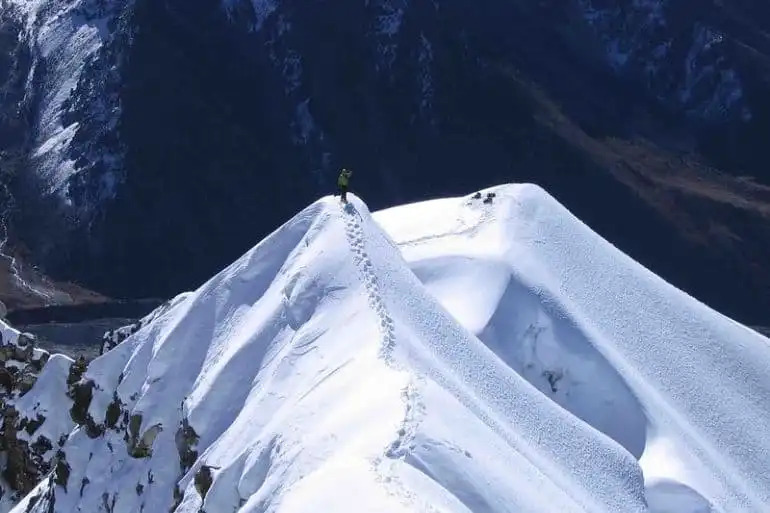
The climb starts at base camp, about 4,950 meters high. Next, climbers go up to high camp, about 5,400 meters high. Summit day starts in the dark, often near midnight. First, there is a steep rocky hill. Hands and feet both help here. After that, the path turns to snow and ice. Climbers wear metal spikes on their boots, hold an ice axe and stay tied to a rope. The last part is a thin ridge with deep drops on both sides. It looks scary, but guides set up ropes and lead the way.
The whole summit day takes about eight to twelve hours, up and down. It is a long and tiring day. Still, most of the climb is steady walking, not hard rock climbing.
A beginner can climb Lobuche, but training is needed. Strong legs and good breathing help the most. Running, stair climbing and hiking with a heavy bag are all good ways to get ready. A strong mind helps too. On a tough day, the wish to keep going matters as much as strong legs. Guides also teach simple skills, like how to use the spikes and the rope, before summit day.
Spring and autumn are the best seasons. March to May has mild days and calm weather. October and November have clear skies and great views. Winter is freezing cold, and summer brings clouds, rain and snow.
A big climb needs a good plan. Nepal Social Treks and Expedition has helped travelers in Nepal since 2006. The team gives each climber an experienced guide and strong porters to carry the heavy bags. It also gets the permits, arranges the transport, and books hotels in the city and cozy teahouses on the trail. Travelers can join a small group or plan a private trip with family or friends. Each plan fits the time and wishes of the climber. Flights and travel insurance are usually not included, so they must be booked separately. It is smart to ask the company about the price and dates before booking.
Lobuche peak is a real test, but it is not out of reach. The height is the main problem, and time, rest and training help a lot. With a good guide, slow steps and a brave heart, many normal people reach the top. The prize is a sunrise above the clouds, with the tallest mountains on Earth all around.
change the way of wriitng pattern. change the starting sentence.
"Only one more hour to the top!" the guide says, and tired climbers smile through frozen faces. It is early morning, and the sun is just starting to glow. This is a normal summit day on Lobuche peak in Nepal. The climb is tough, but it is not as scary as it sounds. Here is the story of how it goes, step by step.
The adventure starts long before the snow. Climbers first walk through the Khumbu area, past green hills, rope bridges and Sherpa villages. Most of them follow the Everest Base Camp trail. This slow walk is important. Each day, the body learns to live with thinner air. Rushing is the biggest mistake on this trip. Slow and steady wins here.
Lobuche East is 6,119 meters high. Base camp sits at about 4,950 meters. Here, the guides teach the skills that are needed. Climbers learn how to wear metal spikes on their boots, how to hold an ice axe, and how to move on a rope. These skills sound hard, but they are easy to learn with practice. Nobody has to be an expert on the first day.
Next comes high camp, near 5,400 meters. The camp is small and rocky. The nights are very cold, much colder than a home freezer. Sleep does not come easy at this height. Still, a warm sleeping bag, hot soup and good rest make a big difference. Most climbers go to bed early, because the alarm rings around midnight.
The climb begins in the dark, with only a small light on each helmet. The first part is a steep, rocky hill. Then the path turns into snow and ice. The last part is a thin ridge with deep drops on both sides. It looks scary, but ropes are fixed, and guides walk close by. The whole day takes about eight to twelve hours, up and down. The legs feel heavy, and the breath comes fast. Even so, it is mostly steady walking, not hard rock climbing.
Three things make the climb tough. The first is the height, because the air is thin. The second is the cold, which can slow down hands and feet. The third is the long day, which asks for a strong mind. None of these need special powers. They need training, good clothes and patience.
Beginners can climb Lobuche peak, but only with good practice. Running, stair climbing and hiking with a heavy bag all help. Strong legs and good breathing matter most. A positive mind matters too. On the hardest hour, the wish to keep going often decides who reaches the top.
Spring and autumn are the best seasons. March to May brings mild days and calm weather. October and November bring clear skies and wide views. Winter is freezing, and summer brings clouds, rain and snow.
A climb like this needs a good plan. Nepal Social Treks and Expedition has helped travelers in Nepal since 2006. The team gives each climber an experienced guide and strong porters to carry the heavy bags. It also gets the permits, arranges the transport, and books hotels in the city and cozy teahouses on the trail. Travelers can join a small group or plan a private trip with family or friends. Each plan fits the time and wishes of the climber. Flights and travel insurance are usually not included, so they must be booked separately. It is smart to ask the company about the price and dates before booking.
So, is Lobuche peak really that hard? Yes, it is a real challenge. But it is not out of reach. With slow steps, good training and a caring guide, many normal people stand on top. The reward is a sunrise above the clouds, with Everest, Lhotse and Ama Dablam shining in the distance.
Choose a test user to login and take a site tour.
Lorem Ipsum is simply dummy text of the printing and typesetting industry.
Lorem Ipsum is simply dummy text of the printing and typesetting industry. Lorem Ipsum has been the industry's standard dummy text ever since the 1500s.