Search in Members
Search in Members
Search in Albums
Search in Photos
Search in Blog
Search in Businesses
Search in Contests
Search in Events
Search in Groups
Search in Music Albums
Search in Music Songs
Search in Pages
Search in Questions
Search in Quotes
Search in Site Team
Search in Recepies
Search in Thoughts
Search in Videos
Search in Channels
Search in Wishes
Search in Prayers
6 minutes, 26 seconds
-43 Views 0 Comments 0 Likes 0 Reviews
On day one, you wipe sweat from your face. Banana trees line the path. Butterflies dance over warm rice fields. Ten days later, you stand in ankle-deep snow, wearing every layer you own, breathing air so cold it stings your throat. Same trail. Same trip. Totally different world. That is the wild magic of the Annapurna Circuit Trek, and no other walk on Earth changes this fast.
Most treks show you one kind of landscape. The Circuit shows you five.
You start in the hot lowlands, where farmers grow rice and bananas. Then you climb into cool pine forest. Then into rocky alpine country where only tough grass survives. Then over a frozen pass covered in snow. And finally down into a dry, windy desert that looks like Mars.
It feels like traveling from India to Tibet on foot. In a way, that is exactly what you are doing.
Here are the facts. The Annapurna Circuit trek takes about 12 to 18 days, depending on your pace and how much road you skip by jeep. The total walking distance is around 160 to 230 kilometers, or 100 to 145 miles.
Most days, you walk 5 to 7 hours. You start at roughly 800 meters in the warm hills. You finish the high point at Thorong La Pass, 5,416 meters (17,769 feet). That is a climb of over 4,600 meters. This huge altitude gain is exactly why the environment changes so much.
The first days are green and humid. You follow the Marsyangdi River through deep valleys. Waterfalls spill down the cliffs. Monkeys chatter in the trees.
You will sweat. Wear light clothes and drink plenty of water. Villages here grow rice, millet, and oranges. Buffalo rest in the shade. Kids run out to wave as you pass.
Around 2,000 meters, everything shifts. The heat fades. Pine and fir trees replace the jungle. The air smells fresh and sharp.
Mornings turn crisp. You start wearing a fleece. The peaks appear now, close and huge. Annapurna II and Lamjung Himal tower above the valley. Houses change too, from wood to stone.
Past Manang at 3,519 meters, the trees give up. There is not enough water or air for them.
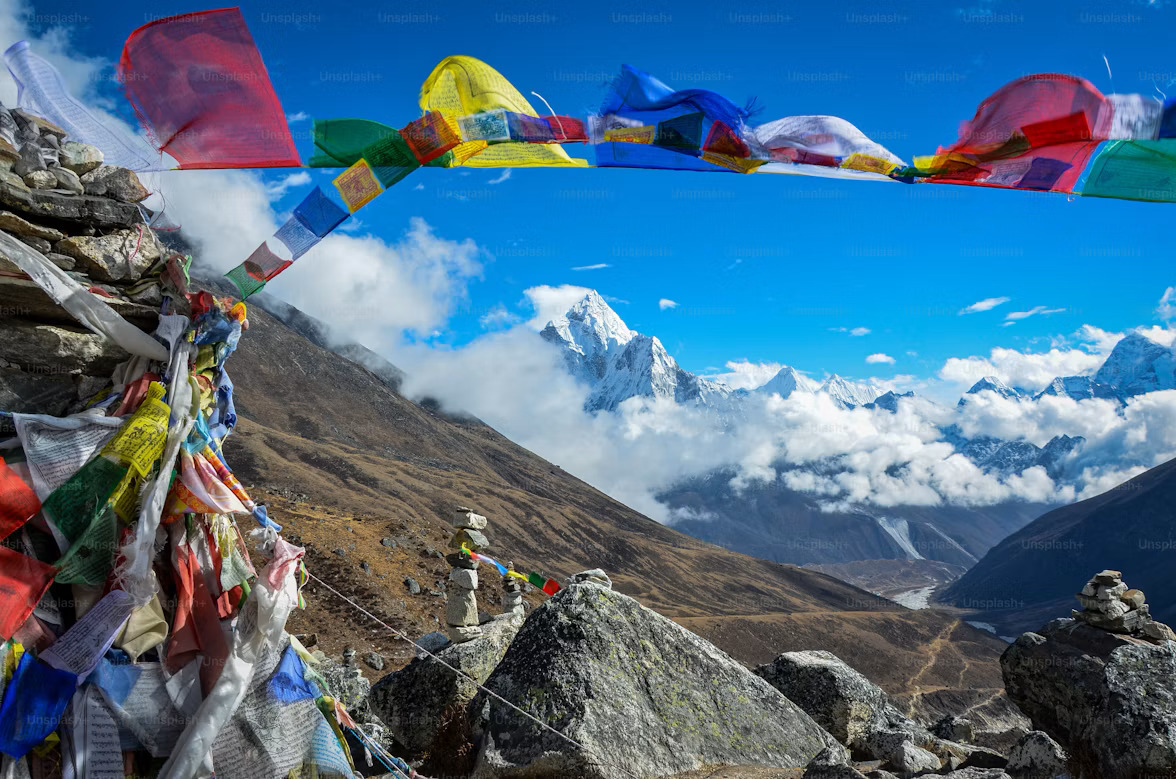
Now the land is brown, bare, and open. Wind sweeps across dusty plains. Yaks graze on tough grass. Tibetan Buddhist culture takes over here. You see monasteries, mani walls, and prayer flags on every ridge.
Rest a day in Manang. Your body needs it. You can even watch a mountain film in a small local cinema at 3,500 meters. It is a strange, fun surprise.
This is the big day. You wake at 3 a.m. in Thorong Phedi. The cold bites through your gloves. Stars fill the black sky.
You climb slowly in the dark, ten steps at a time. The air is thin. It takes 4 to 6 hours to reach the top at 5,416 meters. Snow crunches. Wind howls. Prayer flags crack like whips.
Then you see the sign. You made it. Snow peaks stretch in every direction. You hug strangers. You shout. It is freezing, and you have never felt more alive.
Down the other side, the world changes again. You drop into Muktinath and enter Mustang.
This place is dry and treeless. Red cliffs. Wind-carved rocks. Almost no rain falls here, because the mountains block the clouds. It looks like a desert lifted into the sky.
Further down runs the Kali Gandaki gorge, the deepest gorge on the planet. Apple orchards grow in the villages. Order a slice of fresh apple pie. You earned it.
A trek with this much change needs smart planning. Amble Himalaya is a local Nepali company run by guides who grew up in these valleys.
They sort your ACAP permit and TIMS card, book tea houses along the route, and arrange all transport. Their licensed guides speak English and know the right pace for the high pass. Porters carry your heavy bag so you walk light.
They also build in rest days in Manang for altitude safety and carry first aid gear. Want a shorter version by jeep? A slower pace? They will shape the trip around you.
When you get home and scroll through your photos, you will barely believe they came from one trip. Sweaty jungle. Snowy pass. Red desert cliffs.
Your body walked through five worlds in two weeks. Your heart came back full. That is the Annapurna Circuit, and it never really lets you go.
Choose a test user to login and take a site tour.
Lorem Ipsum is simply dummy text of the printing and typesetting industry.
Lorem Ipsum is simply dummy text of the printing and typesetting industry. Lorem Ipsum has been the industry's standard dummy text ever since the 1500s.